
Monday, January 31, 2011


Sunday, January 30, 2011
A Pray for the Land event is planned for Sunday, January 30 - between 10 and 4 at Beaver Pond, Kanata.

An amazing campaign to protect the most ancient of spaces in the Ottawa River Watershed, a precious, irreplaceable eco forest, and site of critically significant archaeological importance, of national relevance and crucial to the telling of the true history of Canada, is underway in Ottawa - amazing, because Grandfather Commanda sees, after almost a hundred years, mainstream settler community members embrace Aboriginal Peoples in a passionate joint effort to protect a piece of Mother Earth that they have become a part of.
These are not all environmental activists, though many are astonishingly knowledgeable about this rich, bio-diverse landscape, or have made it their jobs to become so; and they have the support of all the critical environmental organizations in the area. Most of them are just the people from the hood - they are the folks who live here, and they don't want to see what is really the precious commons ripped off from under their feet. (Of course, this just makes some ponder more seriously Grandfather Commanda's views about land ownership.) They are old, young, athletic types, disabled folk, photographers, teachers, students archaeologists, botanists, public servants. Most of them work; yet, over the past months, and over the entire holiday season, they have worked tirelessly - non-stop - to mount this campaign to protect the South March Highlands. This is not a 9-5 job for them; they have those responsibilities beyond this - and families, and health issues, and isolation, which bring singular challenges. They are joined by folk from afar, who are passionate about environmental stewardship. Activists are adamant that truths be heard and understood.
At the centre, the presence of the Algonquins of the Ottawa River Watershed has grown ever stronger. One group of Algonquin voices has contributed immeasurably to the growing awareness and understanding of the history of the area, and others to the deepening respect for the Indigenous prayer - the Sacred Fire has protected and comforted strangers, tobacco ties bless the trees, drumming haunts the air, and people look with new eyes at the forest. Leadership representative of Algonquins from both sides of the Ottawa River have raised their voices individually and collectively for a thorough archaeological assessment of the area know known as the South March Highlands - The Invisible Nation will be invisible no longer.
The social landscape is shifting in Canada. Federal communications in the area of Citizenship and Immigrations now note the three founding peoples of Canada - Aboriginal, French and British - and advise new Canadians to learn about the Aboriginal Peoples. It was after the United Nations Conference on Biodiversity in November 2010 that Canada, and finally the United States, signed on to the United Nations Declaration on the Rights of Indigenous Peoples. And Grandfather's fans know who the spirit on the Peace Tower in the National Capital Commission's new Sound and Light Show on the history of Canada now is.
The City of Ottawa has already embraced the Indigenous in its presentation of the Key to the City of Ottawa to Elder Commanda in 2005. It has expressed support for Asinabka, National Indigenous Centre. It has seen the Indigenous voice at the heart of its Festival of Peace. As Gandhi said, There go my people, I must hurry to catch up with them. He also said something about the salt of India. And finally, he said, There is no way to peace - peace is the way. (Now you can guess how many times Grandfather made me watch that movie!)
Just today, Grandfather reminisced about unveiling the Human Rights Tribute on Elgin Street with His Holiness the Dalai Lama - (in 1990, when the Prime Minister would not welcome him here - the Elder holding the Three Figure Welcoming Wampum Belt did) - we blessed the stones with the prayer to have the same human rights as them, he said - and yes, this is 21 years later).
But the journey into the future has begun.
As global news illustrates, times are changing, and we all need to find new and creative ways to respond to the demands and priorities of the times. Bureaucracies must remain vital by attuning themselves to environmental and community realities of the times, and policies programs and legislation must serve the people. The regimes that stripped Grandfather of his heritage and the grand natural resources of his homeland must look afresh at history and find new pathways in the forest. It has not been an easy journey thus far, but this can be a win win for all.
We ask you to join the courageous, educational, inspirational and transformative campaign to protect a precious piece of Turtle Island from wherever you are - Send your message of support to encourage creativity, the engagement of the National Capital Commission, joint problem solving, thorough archaeological assessment, and leadership to Protect the Great Forest to the Mayor of the Capital City - jim.watson@ottawa.ca on Monday!
Megwetch!
Take good care,
Romola
Thursday, January 27, 2011
South March Highlands
From: Paul Renaud
Subject: South March Highlands
Subject: South March Highlands
I am writing to you on behalf of the 14, 500+ persons in the multicultural communities who have come together to protect the South March Highlands from development in west Ottawa – only 20 minutes from Parliament Hill.
This multicultural community includes over 6,500 Algonquin in the First Nation communities of Ottawa, Kitigan-Zibi, Bonnechere, Kinounchpirini, Ardoch, Kichesipirini, and Pasapkedjiwanong who have responded to Grandfather William Commanda’s call for protection (attached). The multicultural communities unified in protecting the South March Highlands also includes another 8,000 Canadians of non-aboriginal heritage as well as many non-Algonquin Metis.
We are asking for your support and influence with both federal and provincial leaders to call for an immediate halt to development and a reassessment of this situation.
The South March Highlands (“SMH”) has been described in official studies as a “wild island” of natural landscape within the City of Ottawa (“City”). Until recently it remained largely in its original natural state because its rugged landscape was unsuitable for agriculture. SMH is the southern end of the Precambrian Canadian Shield outcrop known as the Carp Hills which first emerged from the Champlain Sea 11,000 years ago. Its geology is unique to the National Capital and its wetland-rich land has been described in City studies as “an island of rugged, heavily-glaciated, rocky, Gatineau Hills-like habitat”. The Carp Hills/SMH is the only place in Ottawa where the Canadian Shield is visible on the Ontario side of the great river.
No other major city in the world includes a vigorous old growth forest with endangered species. The closest is perhaps Vancouver’s Stanley Park which is 1/3 the size, contains ½ the variety of vascular plants, and no species-at-risk as compared to the SMH which is refuge for 20 documented species-at-risk of extinction within a small area of only 3 km by 4 km in size.
The SMH is a candidate Provincially Significant Area of Natural and Scientific Interest (“ANSI”) for both its Life Science value (895 hectares) and for its unique Wetland Complex (114 hectares). It has been valued by scientists as the “most important reservoir of ecological potential” in the City because it has the densest bio-diversity and its 30 eco-types of vegetation provide a wide variety of resources for the renewal of depleted natural areas elsewhere. There are 10 distinct habitats within the SMH and the largest deer wintering yard (925 hectares) in the City.
The SMH is the aquifer for North Kanata and its hydrology is integral to both the Carp River as well as to the federally significant Shirley’s Bay wetland complex in the Greenbelt. The SMH is ecologically unique in the City, supporting over 440 native species of vascular plants and has the highest floristic diversity of any natural area in Ottawa.
This SMH is also home to over 269 species of wildlife, including 170species of birds that are known to breed in this area, twice the number found in Punta Cana’s world famous ecological park. The area is also home to the Monarch Butterfly, another species at risk, however no study of insect or bryophyte (non-vascular plant) species has ever been performed. We have written to the Federal Minister of Justice questioning the lack of authority granted to the City to authorize a mass killing of wildlife but have received no response (attached).
The SMH is also rated by the City as having high potential for archaeological resources. To-date, 3 archaeological sites have been found that present evidence of native occupation of the SMH dating back 500 generations. One of these sites was confirmed by eminent archaeologists but is tied up in a court case because the developer who commissioned the research refused to pay for it. Two of the other sites have been identified but not been properly assessed to-date. An archaeological study done by another one of the developers was reviewed by a former president of the Canadian Archaeology Association who determined it was “fatally flawed” for having not adequately considered pre-European-contact cultural resources. Despite appeals to the Ontario Minister of Culture, nothing has been done about this.
We have also been working with the National Capital Commission to protect this area and in conjunction with the Greenbelt Coalition have made formal submissions which have been accepted by the NCC as part of their Greenbelt Master Planning process. Two MPs, Gordon O’Connor and Paul Dewar have called on the NCC to protect this area, as have Elizabeth May, the Sierra Club of Canada, and the David Suzuki Foundation. However, to-date Madame Lemay has declined to confirm any official NCC support for protecting the area.
This matter is now urgent as one of the developers is already clear cutting in the forest and another is about to start at the end of January. With the support of the Algonquin Chiefs, the Inter-Tribal Medicine Council has established a Sacred Fire last week which has been burning continuously to symbolize that this land is a place of Manitou and is integral to the cultural heritage of all Anishinabe people. The Sacred Fire is currently being maintained around the clock by Fire Keepers representing all the communities that have been unified in this cause.
More information about the South March Highlands and our efforts to protect it can be downloaded from the links below. This includes a couple of short videos that are well worth viewing.
We ask that you assist us in whatever way you can to bring this to the attention of both federal and provincial leaders for immediate action.
Please join us by adding your tobacco to our Sacred Fire to protect this place of Manitou.
Kitchi Megwetch,
Paul Renaud
Coalition to Protect the South March Highlands
Letters sent by First Nations:
And by Grandfather William Commanda:
And by other Elders:
Motion passed unanimously by City of Ottawa’s Aboriginal Affairs Advisory Subcommittee:
Videos:
http://www.youtube.com/watch?
http://www.youtube.com/watch?
http://www.youtube.com/watch?
Presentations:
(SMH Overview presentation)
(Stewardship Plan Overview presentation)
(Open issues overview presentation)
Other Letters of Support may be downloaded from:
www.ottawasgreatforest.com (website for the stewardship plan to protect the SMH)
www.southmarchhighlands.ca (website for the coalition to protect the SMH)
(Article in Ontario Nature Magazine)
Greenbelt Coalition Position Paper to NCC on Emerald Necklace
Tuesday, January 25, 2011
Request from Chief Lapointe and others for Firekeepers and Day of Prayer for the Land

Hello Friends
This note is about supporting and saving the land in the South March Highlands, It is calling for two things:
1. Your participation in a day of prayer for the land at the Beaver Pond Forest in the South March Highlands.
What: Day of Prayer for the Land
When: Sunday 30 January at 10h00 – 16h00 (Having experienced a "pray for the land" day previously I can say that participation is itself likely to be a Meeting for Worship) Dress warmly/appropriately for the weather!
Where: Walden Parking Lot, Beaver Pond Forest
Why: Let’s get together as a community to celebrate this Forest!
Who: All people and every Faith are called to join together at the Beaver Pond Forest in Kanata.
for more details see.
http://southmarch.wordpress.com/
2. Accompany/support the firekeeper at Beaver Pond Forest during the rest of this week. Please see the description in the call out below.
I was at the site yesterday and had a wonderful discussion with Chief Mireille Lapointe who works closely with Bob Lovelace on concerns of peace, indigenous rights and the land. If you can volunteer as a firekeeper for this please contact Judy at the email below. In talking with Chief Lapointe she remembers Quakers specifically, especially those who were present from Thousand Island meeting at the "pray for the land" event last year at the Robertsville mine site. She also remarked very favourably on a book she is reading about the Seneca and their relationship with Friends. In addition to calling Judy at the email below, please let me know by phone or email, if you are able to spend some time at the sacred fire. (613-290-6609 (cell)) or if you are planning to go to the day of prayer for the land. I can take a few people in my car and others may be able to share space as well.
I am attaching a detailed letter from Algonquin Chiefs which describes the concerns they have. It is well worth reading. While we all hope that the housing "development" can be halted, there is, regardless of the outcome, much learning for all of us in this experience and our support will be well noted.
Please feel free to circulate this
Peace & Megwetch
Colin Stuart
Clerk, Peace and Social Concerns Committee
Ottawa Monthly Meeting
Call out for volunteers to take shifts tending the Sacred Fire at the Beaver Pond Forest
In a ceremony this afternoon, the Sacred Fire started and maintained by firekeeper Daniel Bernard "Amikwabe" was handed over to the community, to keep it burning. Ron "Big Bear" Goddard conducted the ceremony and Chiefs Mireille Lapointe and Paul Lamothe spoke, expressing gratitude to Amikwabe and speaking words of inspiration to the community. Amikwabe also expressed heartfelt thanks to the community for the overwhelming support and shared learning.
The community -- people of all nations-- have now been entrusted with the responsibility of keeping the Sacred Fire burning. The intent of the fire is to pray for the forest and the animals. Christopher Busby was named as the Firekeeper and given the honour and responsibility of passing on the teachings shared with him by Amikwabe and Big Bear and others and ensuring the fire is maintained in accordance with Anishinabe tradition.
The fire must be watched at all times. Volunteers are needed to take shifts throughout the day and night. Volunteers will receive the key teachings needed for maintaining the Sacred Fire.
As Paul Renaud wrote, "It is essential that all fire keepers understand deeply that this is an altar for prayer and not a bonfire...Maintaining the Sacred Fire properly provides an excellent opportunity to educate those that visit it about traditional values and how they are providing insight into modern problems such as the protection of the South March Highlands."
Volunteers will be scheduled in shifts of 3 hours; some may choose to sign up for back-to-back shifts and stay for a 6-hour period. Details of the overnight shifts will be worked out soon.
Chris Busby is there now and overnight tonight and has lined up volunteers until Tuesday afternoon. If you think you may be able to take a shift or two, please contact Judy Makin, at Judy.Makin@opera.ncf.ca <http://compose?to=Judy.Makin@opera.ncf.ca> , as soon as possible.
INFO for potential volunteers:
This is a Sacred Fire, entrusted to the Ottawa community by Daniel Bernard (Amikwabe). So watch his instructions to see if you’d like to do this (http://www.youtube.com/watch?v=fQvF4_-jJ_8). In brief, the Fire is like an altar, even what we say in the circle around the fire ought to be a prayer for the Forest and her trees and wildlife. No booze or other drugs, profanity, or anything else that would desecrate this sacred place.
Visitors: check-in with the fire keeper so he/she can lead you over to the fire, and enter by the East gate (it will be marked with a log). You may wish to pray or meditate at the Eastern gate. If you see someone paused there, be patient, they are probably preparing to make an offering to the fire (tobacco, sage, cedar, or sweetgrasss). To avoid confusion, if you are NOT preparing to enter by the East gate, don’t stand there! Migwetch.
Please circulate widely
Monday, January 24, 2011
Beaver Pond Forest

Media Release
January 24, 2011
For Immediate Release
Amikwabe Passes Flame to Community to Continue Sacred Fire
(Ottawa) With the blessing of local Algonquin Chiefs, the Sacred Fire at
the threatened continues. In a ceremony Sunday
afternoon, Algonquin Medicine Man Ron “Big Bear” Goddard transferred
firekeeping duties to members of the community, to take over from
Algonquin Daniel Bernard "Amikwabe". Bernard started the fire January 19th
and maintained it day and night, in response to a declaration by Algonquin
Elder William Commanda that the
Christopher Busby was named as the new Firekeeper. He and other community
members will share the duties of maintaining the Sacred Fire, and welcome
those who wish to gather at the fire to offer prayers for the trees and
wildlife of the Beaver Pond Forest and all of the South
"We all sit at the Medicine Wheel and are all children of the same
mother,” explains Chief Mireille Lapointe of the Ardoch Algonquin First
Nation. “We all are responsible for our home and helping each other live a
good life. This is part of the Original Instructions. The sacred fire
brings us together and encourages discussions and synergies that otherwise
wouldn't happen. I'm deeply grateful to Daniel for his sacrifice and his
example to us."
The forests near the Beaver Pond have become a rallying point for nearby
residents and supporters from across Ottawa and beyond, who have
campaigned steadily for the past year to protect the forests and wetlands
threatened by urban expansion. Trees have already been clear-cut for the
Terry Fox Drive Extension and on Richardson Ridge, and KNL Developments
recently received City approval to begin clear-cutting for a subdivision
of more than 3000 homes on the lands north of the Beaver Pond.
Paul Renaud, who is at the forefront of the campaign to protect the South
March Highlands and his himself Metis, notes that “the continuation of the
Sacred Fire by the local community expresses the unity of purpose of all
communities in protecting the forest. The Sacred Fire symbolizes the Great
Circle of Life of which we are all a part.”
“Daniel Amikwabe Bernard and Chief Mireille Lapointe have entrusted me
with making sure the flames continue as a prayer to the Creator to protect
this irreplaceable forest in urban Ottawa,” says Christopher Busby. “I and
many others will attend this fire round the clock until we are told the
fire can be put out. This fire has rallied the Native and non-native
communities in an unprecedented way. There is great power in these
flames.”
Goddard, who is with the InterTribal Medicine Council, is training the
fire keepers and will be overseeing the fire.
-30-
For more information:
Christopher Busby -- 613-897-6183
Paul Renaud -- 613-277-5898
Steve Hulaj -- 613 878-1135
Directions:
Exit Highway 417 at Terry Fox Drive and go North past the shopping
centers. Turn Right and take Kanata
Avenue up the hill. Proceed past Goulbourn Forced Road on the left and
high school on right, to Walden.
Turn Left on Walden and proceed to the very end.
Let's help save the bees!
Quietly, globally, billions of bees are dying, threatening our crops and food. But a global ban of one group of pesticides could save bees from extinction.
Four European countries have begun banning these poisons, and some bee populations are recovering. But chemical companies are lobbying hard to keep all killer pesticides on the market. A global outcry now for a ban in the US and EU, where debate is raging, could provoke a total ban and a ripple effect around the world.
Let’s build a giant global buzz calling for these dangerous chemicals to be outlawed in the US and EU until and unless they are proved to be safe. Sign the petition to save bees and our crops and send this to everyone:
Please click the image to sign the petition!
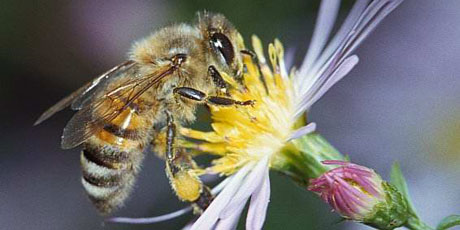
Four European countries have begun banning these poisons, and some bee populations are recovering. But chemical companies are lobbying hard to keep all killer pesticides on the market. A global outcry now for a ban in the US and EU, where debate is raging, could provoke a total ban and a ripple effect around the world.
Let’s build a giant global buzz calling for these dangerous chemicals to be outlawed in the US and EU until and unless they are proved to be safe. Sign the petition to save bees and our crops and send this to everyone:
Please click the image to sign the petition!
Tuesday, January 18, 2011
INTERNATIONAL CULTURE AND DEVELOPMENT WEEK at the UNIVERSITY OF OTTAWA
To everyone involved in International Culture & Development Week 2010 Thank you!
The week was a tremendous success; we were able to reach approximately 4000 students.
We look forward to next year and hope you will be a part of it!
International Culture and Development Week 2010
International Development Week (IDW) is a national event, promoted by the Canadian International Development Agency (CIDA). Many Canadian universities hold an International Development Week on campus in the spirit of engaging the university community in a national movement that encourages global citizenship and encourages students to play an active role in international development.
This year, the University of Ottawa has merged International Week with International Development week to form International Culture and Development Week, (ICDW), which will take place from January 25th to January 30th, 2010.
The week will feature guest lectures, film screenings, panel discussions, workshops, and a variety of other interactive events that tackle global issues. The week will also feature presentations in which student groups representing countries of the world showcase their culture through avenues such as music, food, and dance.
And finally, an action-based conference entitled, "Now What? Tools for Mobilization," will take place on Saturday, January 30th, in which participants will learn how to take practical action in regards to issues such as climate change, international trade, and global health.
The ICDW Executive Committee presents The Global Economic Crisis: Challenges and Opportunities as the overarching theme for this year, with the following sub-themes:
* Health (Monday)
* Food Security (Tuesday)
* Debt, Aid, and Trade (Wednesday)
* Climate Change (Thursday)
* Conflict (Friday)
We hope you will join us in building on last year's successes while forging a new and innovative path in 2010!
Check our updated schedule of events!
For general questions related to ICDW 2010 at the University of Ottawa, please email julie.cook@uottawa.ca.
http://sdi-idw.ca.infolog.ca/en/en-section-home.asp
The week was a tremendous success; we were able to reach approximately 4000 students.
We look forward to next year and hope you will be a part of it!
International Culture and Development Week 2010
International Development Week (IDW) is a national event, promoted by the Canadian International Development Agency (CIDA). Many Canadian universities hold an International Development Week on campus in the spirit of engaging the university community in a national movement that encourages global citizenship and encourages students to play an active role in international development.
This year, the University of Ottawa has merged International Week with International Development week to form International Culture and Development Week, (ICDW), which will take place from January 25th to January 30th, 2010.
The week will feature guest lectures, film screenings, panel discussions, workshops, and a variety of other interactive events that tackle global issues. The week will also feature presentations in which student groups representing countries of the world showcase their culture through avenues such as music, food, and dance.
And finally, an action-based conference entitled, "Now What? Tools for Mobilization," will take place on Saturday, January 30th, in which participants will learn how to take practical action in regards to issues such as climate change, international trade, and global health.
The ICDW Executive Committee presents The Global Economic Crisis: Challenges and Opportunities as the overarching theme for this year, with the following sub-themes:
* Health (Monday)
* Food Security (Tuesday)
* Debt, Aid, and Trade (Wednesday)
* Climate Change (Thursday)
* Conflict (Friday)
We hope you will join us in building on last year's successes while forging a new and innovative path in 2010!
Check our updated schedule of events!
For general questions related to ICDW 2010 at the University of Ottawa, please email julie.cook@uottawa.ca.
http://sdi-idw.ca.infolog.ca/en/en-section-home.asp
Wednesday, January 12, 2011
Announcements section
Please look above and you'll find the "Announcements" tab. All announcements to events, conferences, teach-ins, colloquiums, pow wows, spiritual gatherings, and so on, will be announced here!
Jallalla!
Jallalla!
Subscribe to:
Posts (Atom)